White spot syndrome virus: three days from first sign to empty pond
White spot syndrome virus is the most destructive pathogen in shrimp farming. An outbreak typically takes a pond from the first lethargic animals at the edge to near-total mortality in three to ten days. There is no cure and no vaccine, so every control measure depends on finding the virus before it is in the pond.
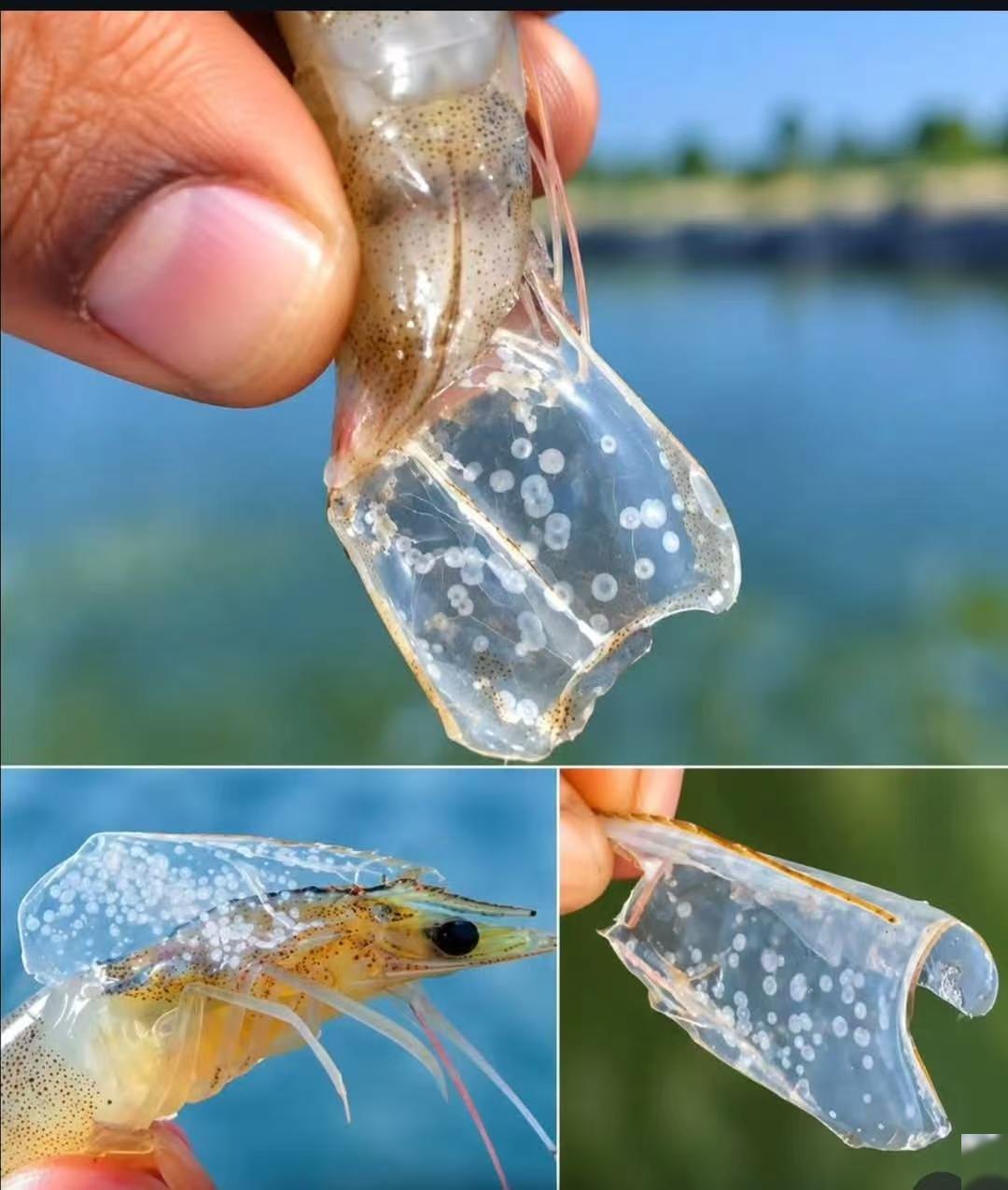
What the spots are
The white spots are calcium deposits in the cuticle, 0.5 to 2 mm across, most visible on the inside of the carapace. They are not the virus itself but the shell's response to it. Affected shrimp stop feeding, swim slowly at the surface or pond edge, and often turn pink to red. Not every infected animal shows spots, and spots alone can also follow water-quality stress, which is why a positive PCR is required before a farm acts.
How the virus enters a farm
Three routes account for most outbreaks: infected post-larvae from a hatchery, carrier crustaceans such as crabs and wild shrimp entering with intake water, and contaminated equipment or frozen shrimp used as feed. Broodstock carry the virus without showing signs and pass it to eggs. The virus survives in water for days and in frozen tissue for months.
Screening points
Hatchery: PCR on broodstock before spawning and on post-larvae before sale. Farm: PCR on the post-larvae batch at arrival (pooled sample of 60 to 150 animals depending on the protocol), on carrier crustaceans caught at the intake, and on the stock itself at the first sign of reduced feeding. Many farms also run a mid-crop check every two to four weeks in high-risk seasons, since low-level infection can persist until a temperature drop triggers an outbreak.
Reading the result
Real-time PCR reports a cycle threshold that reflects viral load. A strong positive in post-larvae is a reason to reject the batch; a weak positive in a grow-out pond is a reason to reduce stress, avoid water exchange during cold snaps and prepare an emergency harvest. Duplex kits test WSSV together with a second pathogen such as decapod iridescent virus, so one run covers the two most common causes of sudden mortality.
Written by the Medicare Vet product team from manufacturer data, WOAH guidance and published validation. Not a substitute for veterinary or laboratory advice in your market.
Products discussed
Catalogue items that apply to this note, each with its own page, specifications and quotation form. The full line is on the aquaculture pcr page.
- Nucleic Acid Detection Kit for White Spot Syndrome Virus (WSSV) (qPCR Method)AQ-11 · WSSV Nucleic Acid Detection Kit (qPCR Method)
- Duplex Nucleic Acid Detection Kit for White Spot Syndrome Virus (WSSV) and Decapod iridescent virus 1 (DIV1) (qPCR Method)AQ-22 · WSSV & DIV1 Duplex Nucleic Acid Detection Kit (qPCR Method)
- Nucleic Acid Detection Kit for Infectious Hypodermal and Hematopoietic Necrosis Virus (IHHNV)(qPCR Method)AQ-14 · IHHNV Nucleic Acid Detection Kit (qPCR Method)
- Compact real-time PCR analyser, 24-wellINS-MG242 · Micgene 242
Questions
How fast does WSSV spread?
In a warm pond, from first signs to 80 to 100 % mortality in three to ten days. Cooler water slows it, which is why outbreaks cluster around temperature drops.
Can shrimp recover?
No. Infected shrimp do not clear the virus and there is no treatment. Survivors of a mild episode remain carriers.
Is WSSV a risk to people?
No. It infects crustaceans only, and shrimp from an affected pond are safe to eat, though usually unmarketable.
More from the knowledge pages
- EHP in shrimp: why the hepatopancreas looks normal until it is too late2026-09-21 · Aquaculture PCR
- Chairside molecular testing: what changes when PCR-grade results arrive in 30 minutes2026-09-21 · Isothermal amplification
- How to read a veterinary rapid test correctly, and when not to trust it2026-09-21 · Rapid test