EHP in shrimp: why the hepatopancreas looks normal until it is too late
Enterocytozoon hepatopenaei is a microsporidian parasite of the shrimp hepatopancreas. It rarely kills, which is exactly the problem: a pond can carry it for weeks while growth slows, feed conversion worsens and sizes spread, and by the time the signs are obvious the spores are in the sediment.
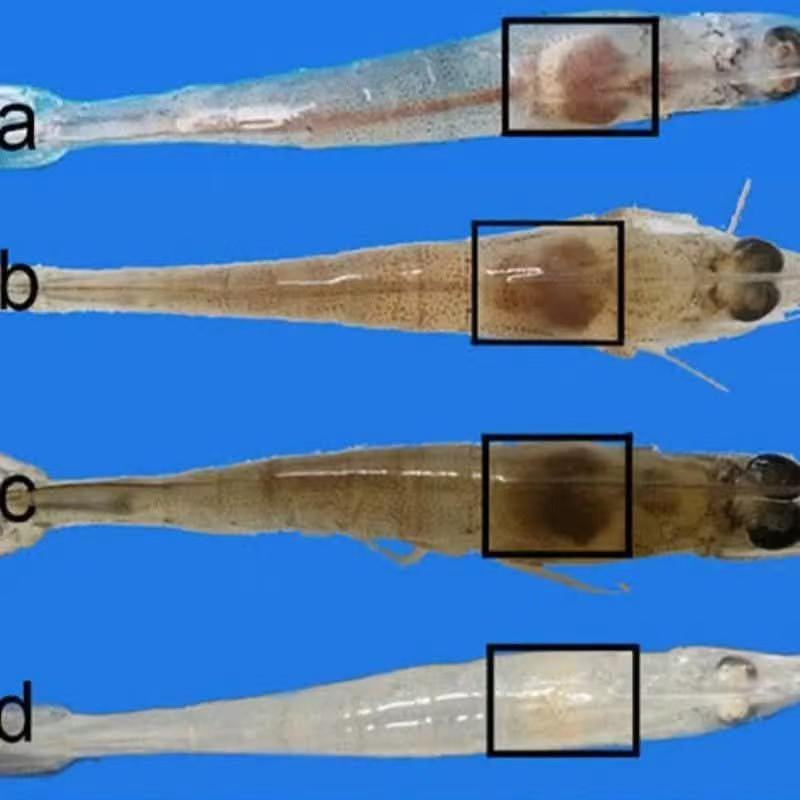
What EHP does
EHP infects the tubule epithelial cells of the hepatopancreas, the organ that digests feed and stores energy. Infected cells produce spores instead of enzymes, so the shrimp absorbs less of what it eats. The visible result is retarded growth, wide size variation within the same pond, soft shells and, in some farms, white faeces. Mortality stays low, so the disease is often blamed on feed, water or genetics first.
The parasite was described in Thailand in 2009 and is now reported across South and Southeast Asia, China, and parts of Latin America. It is on the WOAH list of diseases of concern for crustaceans.
How it spreads
Spores leave the shrimp in faeces and are eaten by pond mates, either directly or through cannibalism of weak animals. Spores survive in pond sediment and in live feed such as polychaete worms and Artemia, which is how broodstock in a hatchery become infected and pass the parasite to post-larvae. Once a pond is contaminated, spores persist between crops unless the bottom is treated.
Why it is screened, not treated
There is no registered treatment that clears EHP from an infected shrimp, and shrimp cannot be vaccinated. Control is exclusion: stock only PCR-negative post-larvae from PCR-negative broodstock, test live feed before use, and monitor the pond during the crop so a positive result triggers an early harvest or a change of plan rather than a lost cycle.
Microscopy of hepatopancreas smears can find spores, but only at high loads and with a trained eye. Real-time PCR finds the parasite weeks earlier, at the stage when the decision still saves money.
What to sample and when
Hatchery: broodstock faeces (non-lethal) and live feed before every batch; a pooled sample of post-larvae before they are sold. Farm: a pooled hepatopancreas sample from 10 to 20 shrimp at stocking, every two to three weeks during the crop, and whenever growth falls behind the feed table. Pond: sediment from the feeding area between crops, to decide whether the bottom needs liming and drying before restocking.
Two EHP targets are in common use: the SSU rRNA gene, which is the most sensitive, and the spore wall protein (SWP) gene, which does not cross-react with related microsporidia in the pond. Laboratories often run both.
Running the test on the farm
The aquaculture line is fully lyophilised, so the kit is stored at room temperature and rehydrated with the sample extract on the day of use. An extraction-free buffer prepares tissue in five minutes; the compact 24-well analyser gives a result in about 50 minutes. Farms without a laboratory can therefore screen at the pond, and hatcheries can certify a batch the same day.
Written by the Medicare Vet product team from manufacturer data, WOAH guidance and published validation. Not a substitute for veterinary or laboratory advice in your market.
Products discussed
Catalogue items that apply to this note, each with its own page, specifications and quotation form. The full line is on the aquaculture pcr page.
- Nucleic Acid Detection Kit for Enterocytozoon hepatopenaei (EHP)(qPCR Method)AQ-01 · EHP
- Nucleic Acid Detection Kit for Enterocytozoon hepatopenaei SWP Gene (EHP-SWP) (qPCR Method)AQ-02 · EHP-SWP Nucleic Acid Detection Kit
- Duplex Nucleic Acid Detection Kit for Enterocytozoon hepatopenaei (EHP) and Acute Hepatopancreatic Necrosis Disease (AHPND)(qPCR Method)AQ-21 · EHP & AHPND Duplex Nucleic Acid Detection Kit (qPCR Method)
- Compact real-time PCR analyser, 24-wellINS-MG242 · Micgene 242
Questions
Can EHP be seen by eye?
Not reliably. A pale, shrunken hepatopancreas and wide size variation are suggestive, but the same picture appears with poor feed and water quality. PCR confirms it.
Does EHP kill shrimp?
Rarely on its own. It reduces growth and feed conversion and makes the animal more vulnerable to other infections such as AHPND, which is why the two are often tested together.
What does a positive result mean for the pond?
Depending on load and stage of the crop: harvest early, stop live feed, or complete the cycle with closer monitoring. Between crops, dry and lime the pond bottom to inactivate spores.
More from the knowledge pages
- White spot syndrome virus: three days from first sign to empty pond2026-09-21 · Aquaculture PCR
- Chairside molecular testing: what changes when PCR-grade results arrive in 30 minutes2026-09-21 · Isothermal amplification
- How to read a veterinary rapid test correctly, and when not to trust it2026-09-21 · Rapid test